


Nestled in the breathtaking southern Peruvian Andes, soaring over 5,000 meters above sea level, you’ll find one of the most renowned and thoroughly researched tropical glaciers on the planet: the Quelccaya Ice Cap. In Quechua, it’s called Qullqaya, which translates to “snow layer” or “accumulation of ice.”
This vast glacial wonder has become a vital natural laboratory for scientists and a key indicator of global climate change. Its grandeur, rich geological history, and current vulnerability make Quelccaya a powerful symbol of the connection between nature and humanity. A Tropical Colossus Situated in the Cusco region, within the province of Quispicanchi, Quelccaya spans roughly 44 square kilometers, although its size has fluctuated dramatically in recent decades due to rapid melting.
It holds the title of the largest tropical ice cap in the world, with ice walls that can exceed 200 meters in thickness in certain spots. The highest point reaches about 5,680 meters. What sets Quelccaya apart from glaciers in polar regions is that it’s a tropical glacier—an incredibly sensitive formation when it comes to temperature changes. This sensitivity has made it a focal point for climatological research, as its behavior provides valuable insights into past climate patterns and helps predict future trends with impressive accuracy.
A Record of Climate History
One of the most remarkable things about Quelccaya is how it keeps a record of our planet’s past, all locked away in layers of ice that have built up over thousands of years. Scientists have drilled deep into this ice to pull out cores that hold tiny air bubbles, which contain valuable atmospheric data. This allows us to piece together a picture of past climate events, including historical droughts, volcanic eruptions, and temperature shifts that span centuries.
Research on Quelccaya has shown that certain times in Andean history align with sudden climate changes. For instance, the rise and fall of ancient settlements can be traced back to periods of severe dryness or cooling. In this way, the glacier acts as a natural history book, chronicling human development in the Andean region.
Additionally, as a tropical glacier, Quelccaya offers insights that complement findings from Greenland and Antarctica, giving us a broader and more complete understanding of Earth’s climate system. Ecological and Cultural Importance But Quelccaya is more than just a scientific treasure; it plays a crucial role in the region’s water balance.
The meltwater from the glacier feeds rivers that provide drinking water for local communities, support agriculture, and sustain livestock in the high Andes. These communities rely on the seasonal water flow from the glacier, especially during the dry months. For the Andean people, Quelccaya is also spiritually significant.
It’s part of the sacred mountains, or apus, which are seen as guardians of life and fertility. Local communities engage in traditional rituals to show their respect and gratitude toward the glacier, weaving it into an ancestral worldview where nature is viewed as a living, breathing entity.
The Glacier’s Dramatic Retreat
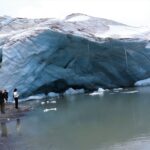
Since the late 20th century, Quelccaya has been on a noticeable retreat. Field studies and a series of photographs reveal that the glacier’s western edge has pulled back hundreds of meters in just a few decades—much faster than what you’d expect from natural cycles. Rising global temperatures, unpredictable climate patterns, and unusual precipitation have sped up the melting process. As a result, proglacial lakes are starting to form in areas that were once blanketed in ice, raising the risk of sudden flooding and ground instability.
This retreat is a concerning signal, not just for Peru but for the entire planet: tropical glaciers are incredibly sensitive to even minor temperature shifts, making them early warning signs of global warming. Implications for the Future The gradual disappearance of Quelccaya would have serious consequences. From reduced water supply for nearby communities to the loss of a climate archive that spans millennia, its impacts would resonate both locally and globally. On a brighter note, there’s a growing interest in conserving and monitoring the glacier.
International scientific programs, educational initiatives, and responsible tourism projects are all working to highlight its significance. Plus, local communities are starting to adopt adaptation practices to tackle the increasing water vulnerability that could worsen down the line. Quelccaya as a Symbol More than just its impressive size or stunning beauty, Quelccaya stands as a powerful reminder of the connection between humans and the environment. Within its ice lie stories that stretch back centuries; its retreat, however, narrates a story we are actively writing today.
Taking care of, studying, and understanding Quelccaya isn’t just a scientific endeavor; it’s also an ethical responsibility to future generations. Quelccaya teaches us that the planet’s climate is ever-changing and that our actions—no matter how far removed they may seem from its icy expanse—play a role in shaping its future.
Implications for the Future
The progressive disappearance of Quelccaya would have profound impacts. From diminishing water availability for nearby communities to the loss of a millennia-old climate archive, its effects would be felt both locally and globally.
However, there is growing interest in the conservation and monitoring of the glacier. International scientific programs, educational initiatives, and responsible tourism projects aim to raise awareness of its importance. Additionally, local communities have begun integrating adaptation practices to mitigate the increasing water vulnerability that may worsen in the future.
Quelccaya as a Symbol
Beyond its impressive size or natural beauty, Quelccaya serves as a tangible reminder of the interdependence between humans and their environment. In its ice are recorded stories spanning centuries; its retreat, on the other hand, tells a story we are writing today.
Caring for, studying, and understanding Quelccaya is not only a scientific task: it is also an ethical commitment to future generations. Quelccaya shows us that the planet’s climate is not static and that our actions—no matter how distant they may seem from its frozen walls—influence its fate.


Leave A Reply