


Peru is home to many iconic hiking routes, but few compare to the raw beauty and spiritual magnetism of the Ausangate Trek. Unlike the well-known Inca Trail or the bustling lanes of Machu Picchu, Ausangate offers a different kind of adventure—one defined by solitude, towering glaciers, turquoise lagoons, roaming alpacas, and encounters with remote Andean communities who still live by ancient traditions. This high-altitude trek, located in the Vilcanota mountain range near Cusco, is not just a physical challenge; it is an emotional and cultural pilgrimage into one of the most untouched regions of the Andes.
Sacred Mountain, Living Legacy
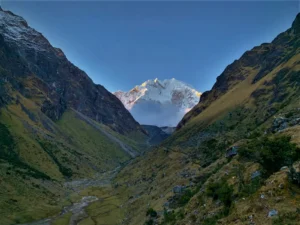
Ausangate, standing at 6,384 meters (20,945 ft), is the highest peak in the Cusco region and is revered as an Apu—a sacred mountain spirit in Andean cosmology believed to protect the land and its people. Locals consider the mountain a powerful deity tied to water, fertility, and life, feeding glaciers that supply rivers to nearby valleys.
Each year, thousands of pilgrims walk around its base for the Qoyllur Rit’i festival, a spiritual event blending Catholic traditions with pre-Hispanic worship. This sacred aura gives the trek an atmosphere beyond adventure alone—it becomes a journey into the spiritual backbone of Andean culture.
A Landscape That Redefines “Wow”
The Ausangate Trek delivers scenery in constant superlatives. From the moment the trail begins, hikers are immersed in landscapes that look almost unreal:
-
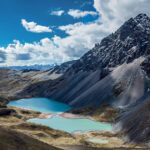
Iridescent lakes such as Laguna Sibinacocha, Ausangatecoccha, and the stunning lagoons of Pucacocha and Alqacocha, shimmering in hues of turquoise, emerald, and sapphire.
-
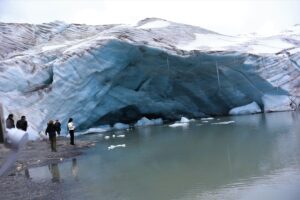
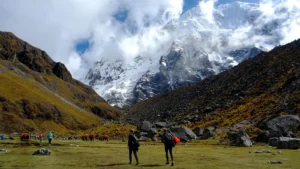
Glacial peaks exploding into the sky, often dusted with fresh snow.
-
Multi-colored mountains, thanks to mineral-rich soil painted in reds, ochres, golds, and greens.
-
Highland wildlife, including alpacas, llamas, Andean foxes, vizcachas, and if fortune smiles—condors soaring overhead.
-
Andean night skies, utterly free of light pollution, illuminating the Milky Way in a way rarely seen elsewhere.
No two hours on this trek feel the same. Weather, shadows, clouds, and sunlight transform every view continuously, making each step feel like entering a living painting.
The Route: Challenge Meets Reward
Most Ausangate treks take 4 to 6 days, covering approximately 50–70 kilometers, depending on chosen variations. Unlike more structured treks, this route remains rugged and remote, with limited towns along the way. Hikers should be prepared for a true wilderness experience.
Key highlights typically include:
Upis – The starting point for many routes, surrounded by grazing llamas and soothing hot springs perfect for easing sore muscles after the first day.
Arapa Pass (4,850 m / 15,912 ft) – The first major pass, offering dramatic views of surrounding glaciers and valleys.
Laguna Pucacocha – Also called the “Red Lake” due to mineral sediments, framed by snow-capped peaks and an atmosphere of total serenity.
Palomani Pass (5,200 m / 17,060 ft) – The highest point on most itineraries, where lungs burn thin and cameras never stop clicking. Crossing this pass feels like walking on top of the Andes themselves.
Rainbow Mountain (Vinicunca or Pallay Punchu, depending on route) – Many itineraries include one of Peru’s famous rainbow mountains. Vinicunca brings the classic striped colors, while Pallay Punchu dazzles hikers with razor-sharp ridges resembling woven textiles.
Pacchanta – A tranquil village where hikers are rewarded with natural hot springs facing Ausangate, a surreal way to end days of trekking.
More Than a Hike—A Cultural Encounter
Though remote, the Ausangate region is far from empty. Indigenous Quechua communities inhabit the high puna grasslands, living much the way their ancestors did for centuries. Their livelihoods center around herding alpacas and llamas, weaving textiles, and maintaining a reciprocal relationship with the land.
Trekking here often allows meaningful cultural exchanges:
-
Watching traditional textile weaving using natural dyes made from plants, minerals, and even insects like cochineal.
-
Observing herders guide alpaca caravans through the mountains.
-
Learning traditional Quechua words and customs.
-
Experiencing genuine hospitality rooted in ayni, the Andean tradition of reciprocity and mutual support.
For many visitors, these human encounters become as unforgettable as the landscapes themselves.
Preparing for the Challenge
The Ausangate Trek is not technically difficult, but it is physically demanding due to high altitude, steep ascents, cold conditions, and long walking days. Proper preparation is essential:
✅ Acclimatization: Spend at least 2–3 days in Cusco before starting.
✅ Altitude awareness: Be mindful of symptoms such as headaches, nausea, or dizziness.
✅ Proper gear: Thermal layers, waterproof jackets, sturdy boots, and down jackets are critical.
✅ Hydration and nutrition: The dry, high climate dehydrates quickly.
✅ Traveling with local guides and muleteers: Not only safer but also supports local economies and enriches the cultural experience.
When to Go
The best season for the Ausangate Trek is during the dry months (April to October), when skies are clearer and trails less muddy. Nights are colder during this time, often dropping below freezing, but the trade-off is more stable weather and stunning visibility. The rainy season (November to March) brings dramatic landscapes but increased trail difficulty and clouds that may obscure mountain views.
Sustainable Travel & Respect
Because Ausangate is an untouched region with fragile ecosystems, responsible tourism is crucial:
-
Pack out all waste—leave no trace.
-
Respect wildlife by keeping a safe distance.
-
Support local communities by hiring local guides, purchasing textiles directly from artisans, and staying at community camps.
-
Respect sacred spaces and ask before photographing individuals or rituals.
Final Thoughts: Why Ausangate Changes You
The Ausangate Trek is more than a bucket-list achievement—it is a transformative experience that challenges the body, awakens the senses, and humbles the spirit. The combination of untouched wilderness, cultural authenticity, and sacred energy makes it one of the most rewarding treks on the planet.
In a world where many travel destinations are increasingly commercialized, Ausangate remains beautifully raw, fiercely authentic, and deeply moving. It does not ask for speed or perfection—only presence.
For those who seek adventure with soul, beauty without crowds, and a story that stays with them forever, one thing is certain:
Ausangate does not just welcome trekkers… It changes them.


Leave A Reply